Retro Moto Looks & Comfort
Moped-Style
Big saddles, fat tires, pegs and moto styling — the e-bikes that look and ride like a moped but keep the pedals. Street-legal, full-suspension cruisers we've tested on camera.
The fifteen best moped-style e-bikes on the market right now, ranked — Super73, ONYX and the challengers that undercut them.
Goat Power Bikes
Street-legal SL moped-style cruisers with full suspension and pedals.
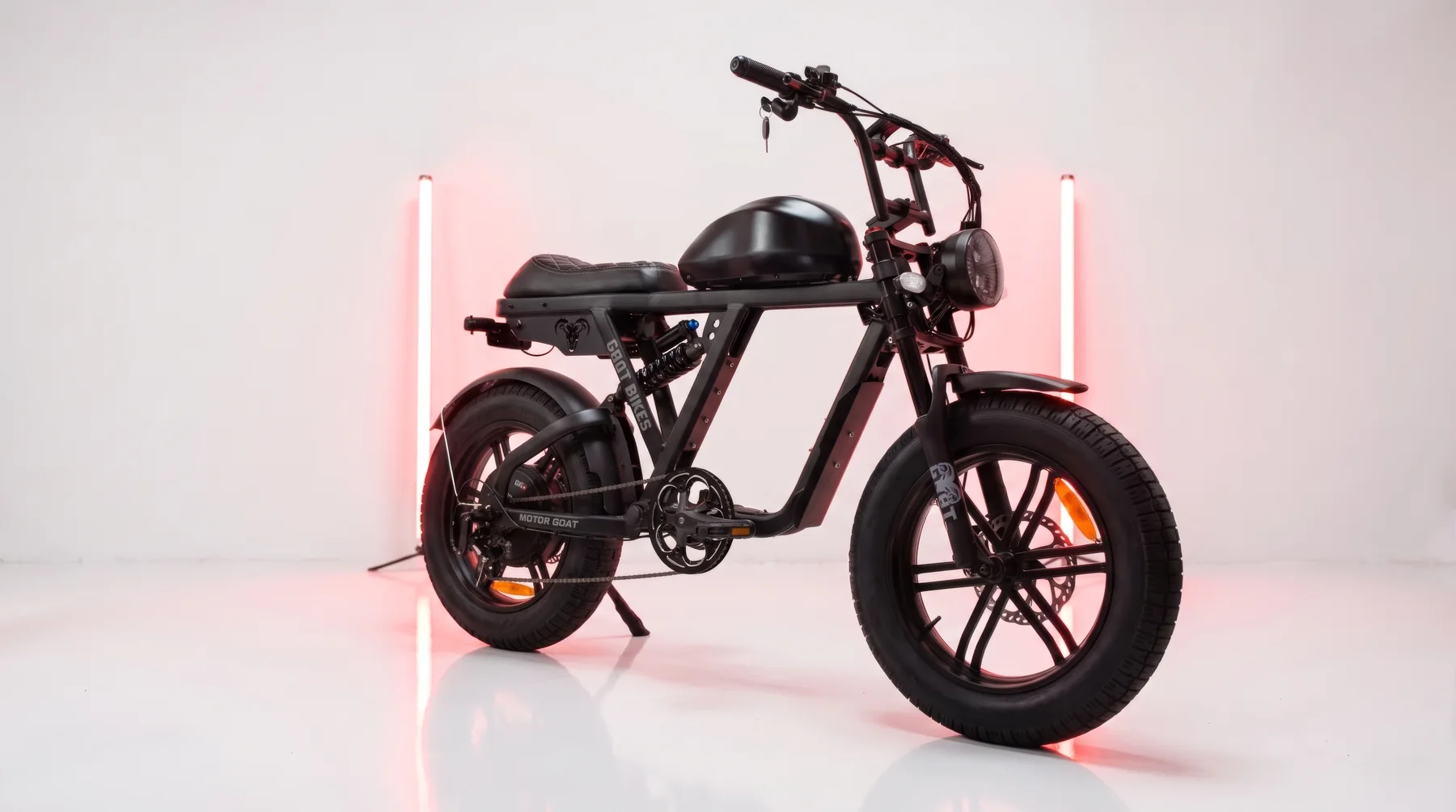
Motor Goat SL
The best-selling Motor Goat frame, now street-legal — a Class 2 / Class 3 e-bike with a 750W (1,000W peak) motor, UL-certified 52V battery, full suspension and 4-piston hydraulic brakes. Road-legal in all 50 states.
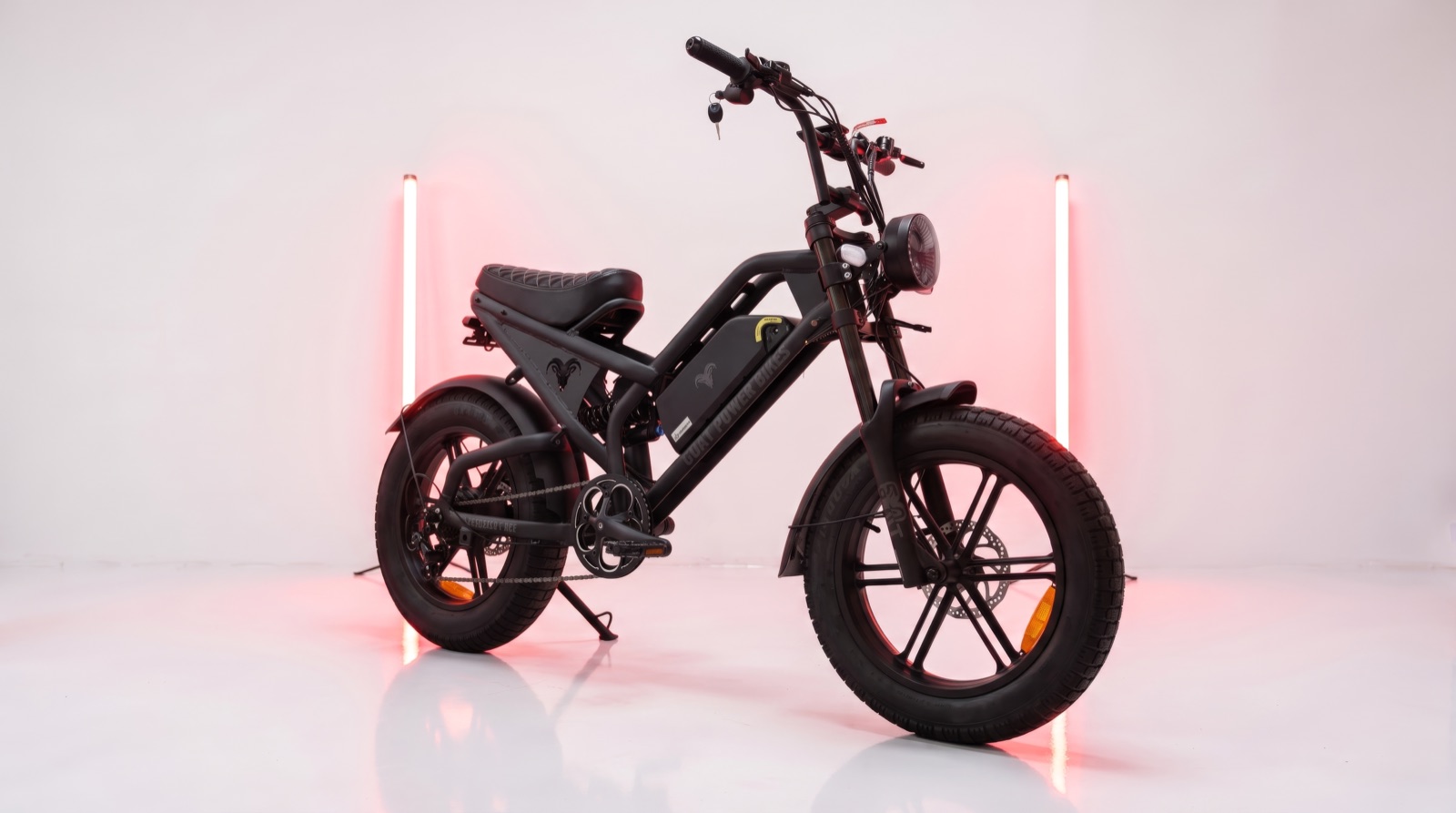
Billy Goat SL
The original fat-tire Billy Goat, now street-legal — a Class 2 / Class 3 e-bike with a 750W (1,000W peak) motor, UL-certified 52V Samsung battery, full suspension and Karasawa 4-piston hydraulic brakes. Road-legal in all 50 states.
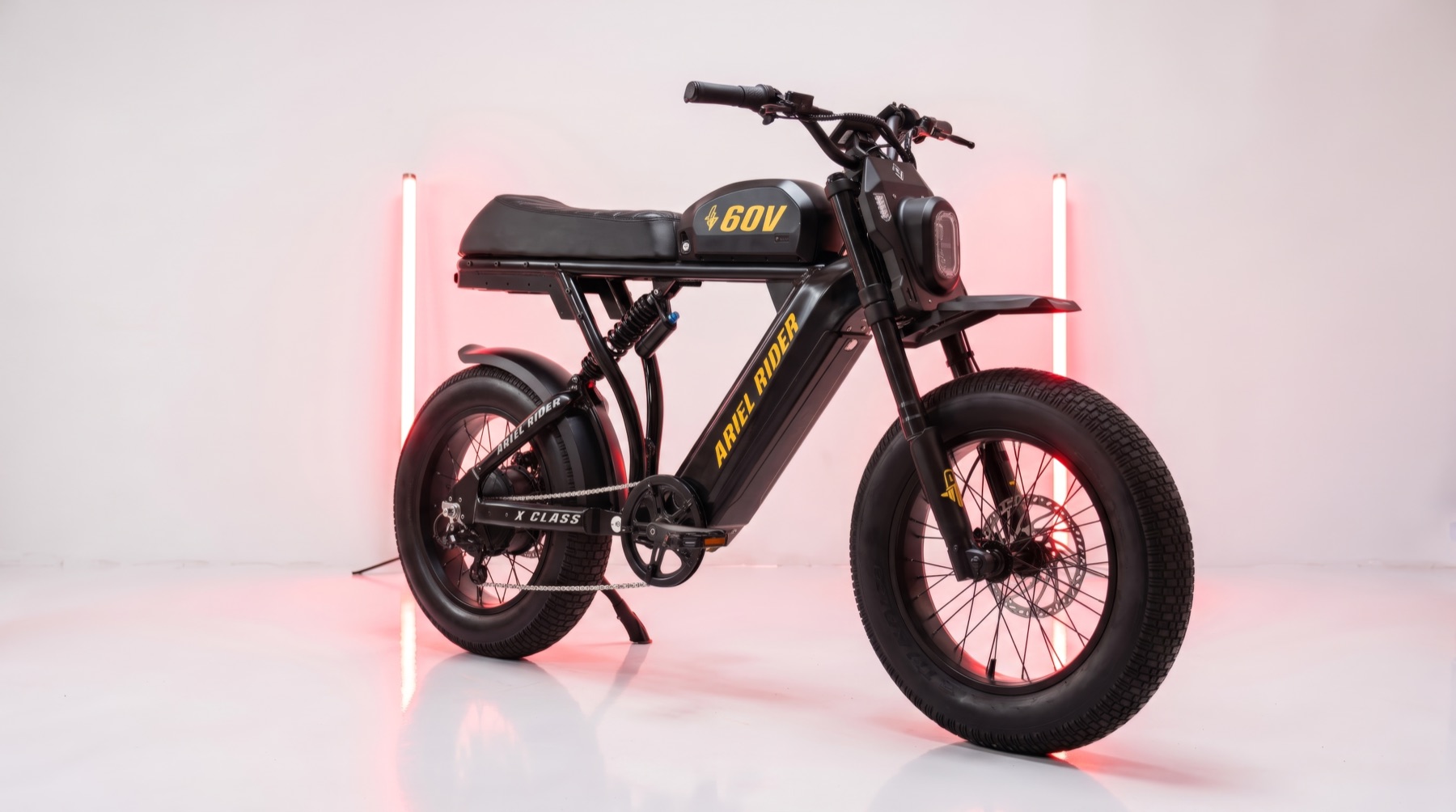
Ariel Rider
Moto-styled 60-volt fat bikes with full suspension and huge range.
Macfox
Punk-inspired fat-tire e-bikes — mini motos, street cruisers and moto-styled fat bikes with removable batteries and UL-2849 safety.
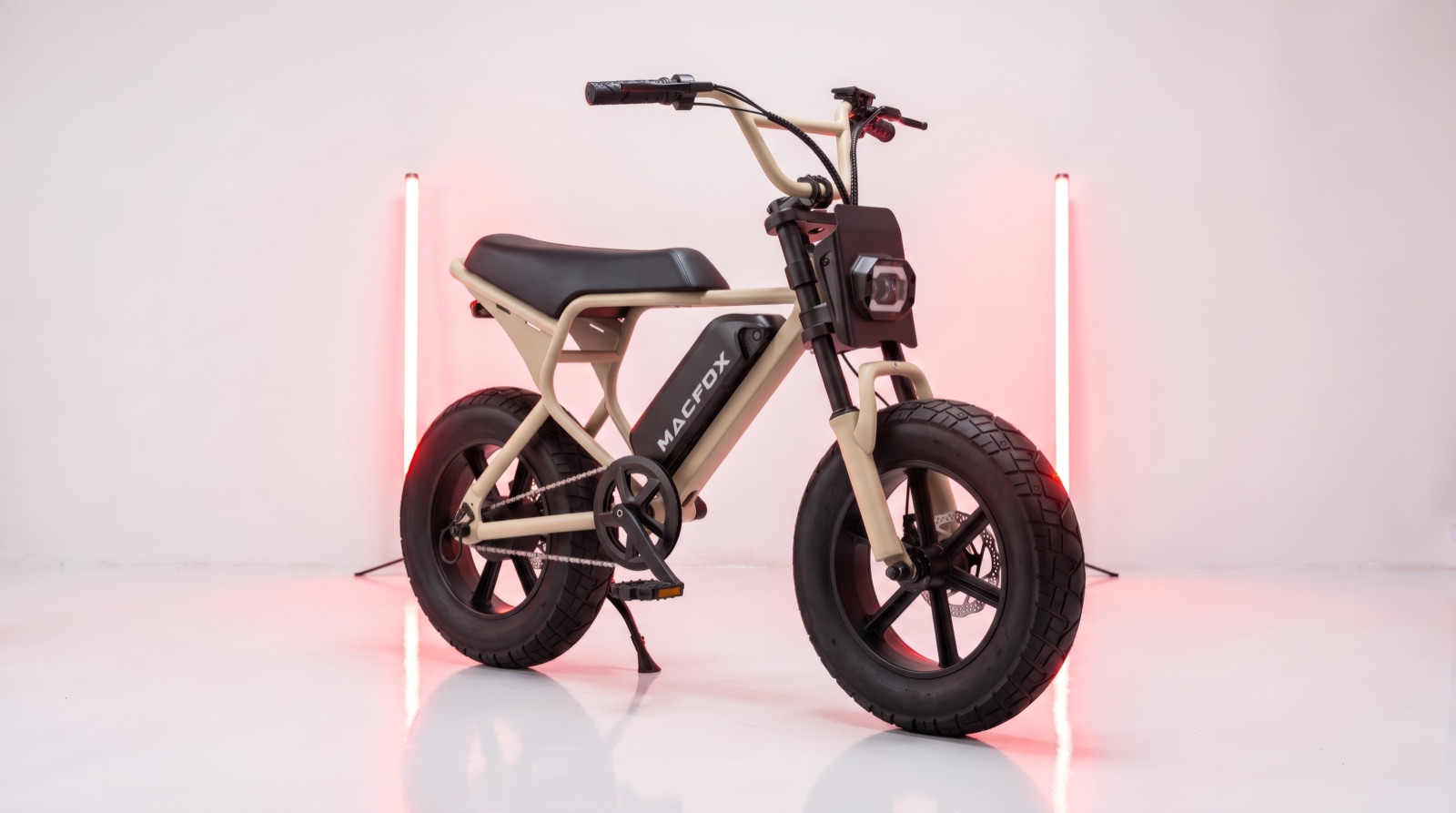
Macfox M16
The pint-sized punk of the range — a compact 16-inch fat-tire mini moto with a 500W (750W peak) hub, a removable 48V battery, UL-2849 safety and a stretched cruiser saddle.
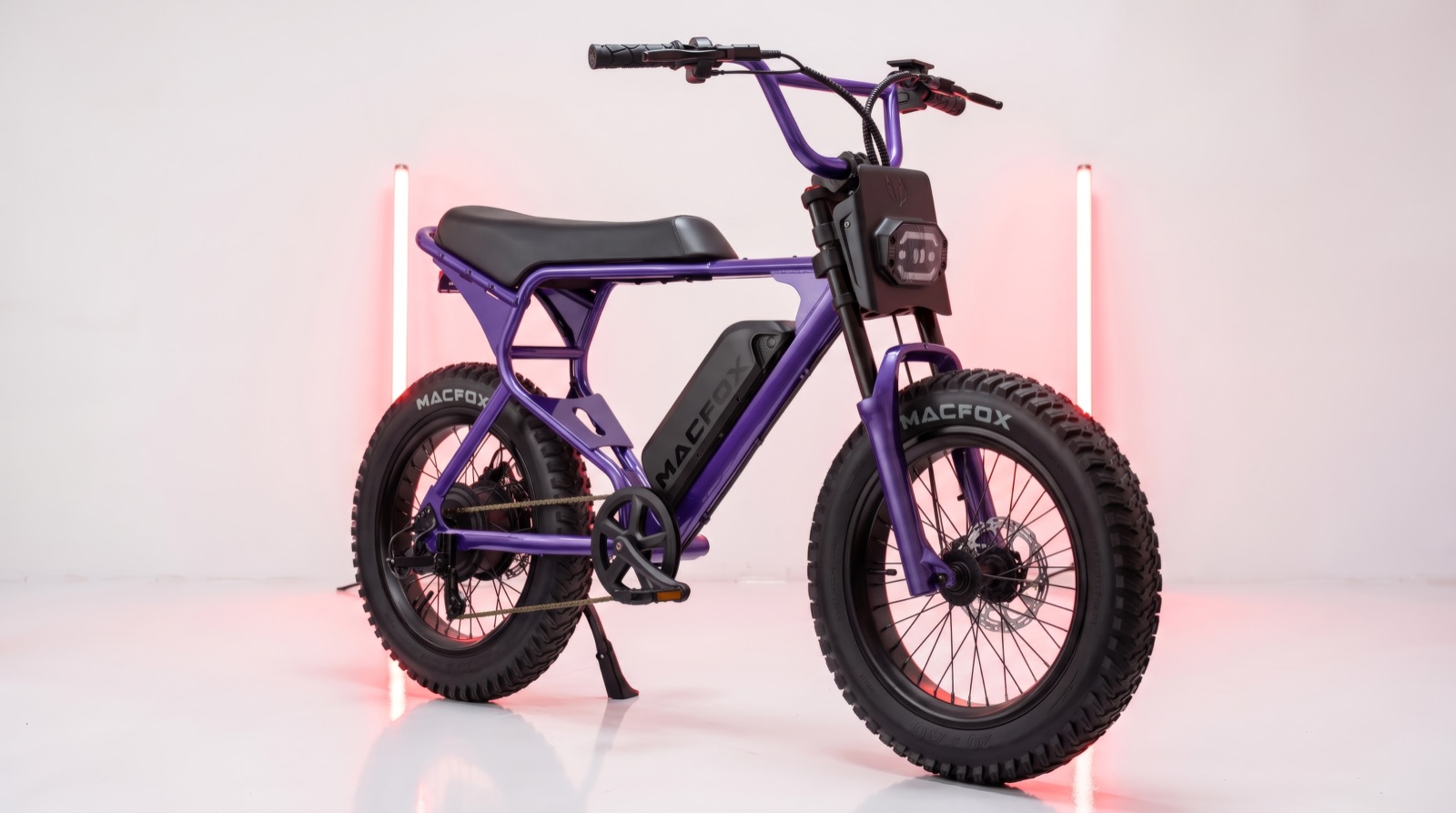
Macfox X1S
A punk-styled 20-inch fat-tire cruiser with a 500W (750W peak) hub, hydraulic disc brakes, UL-2849 safety and an optional second battery for up to 56 miles.
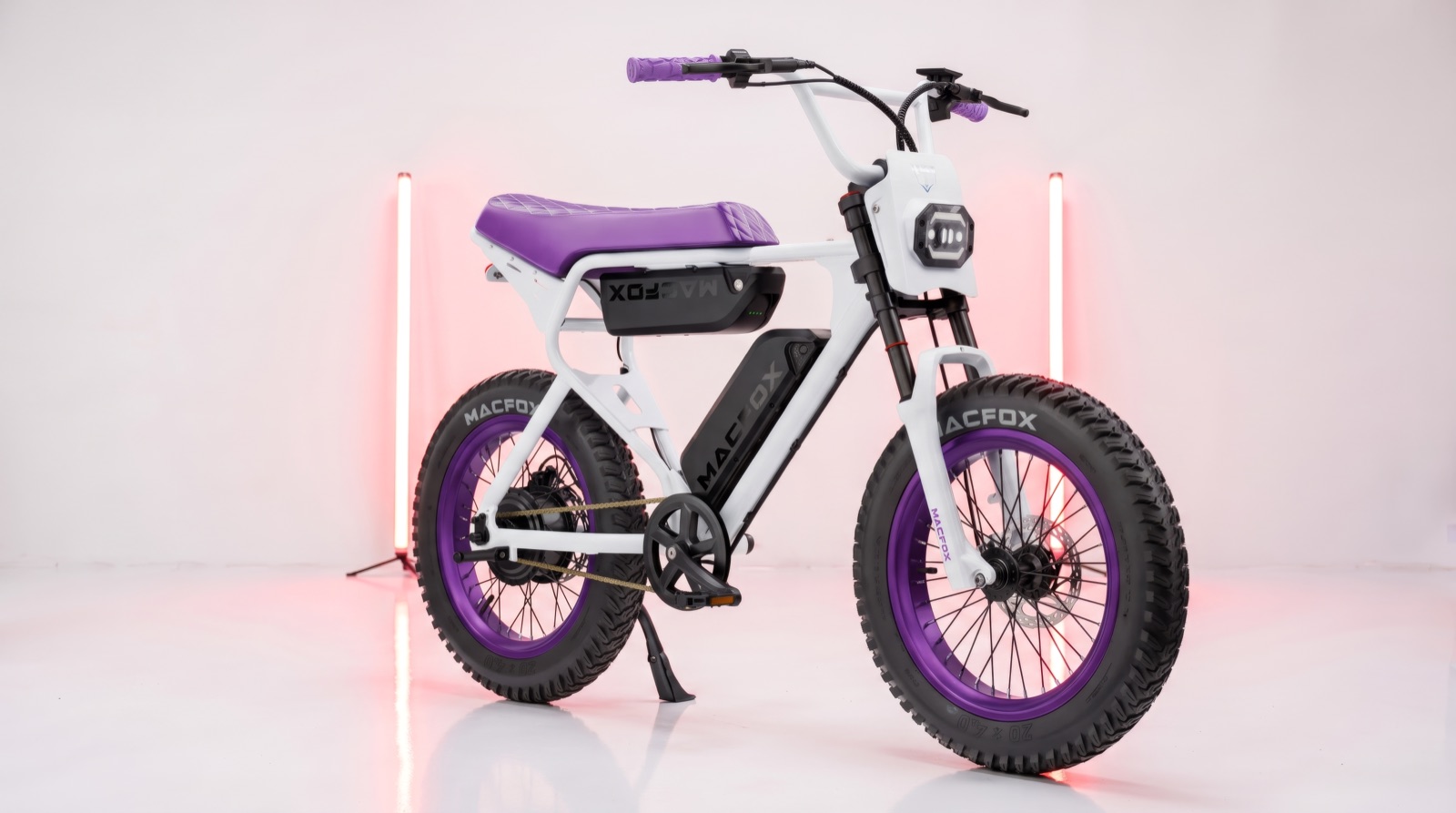
Macfox X1S × Bs.zay
A limited pearl-white artist edition of the X1S — identical hardware, hydraulic brakes and up-to-56-mile dual-battery range, in an exclusive Bs.zay livery.
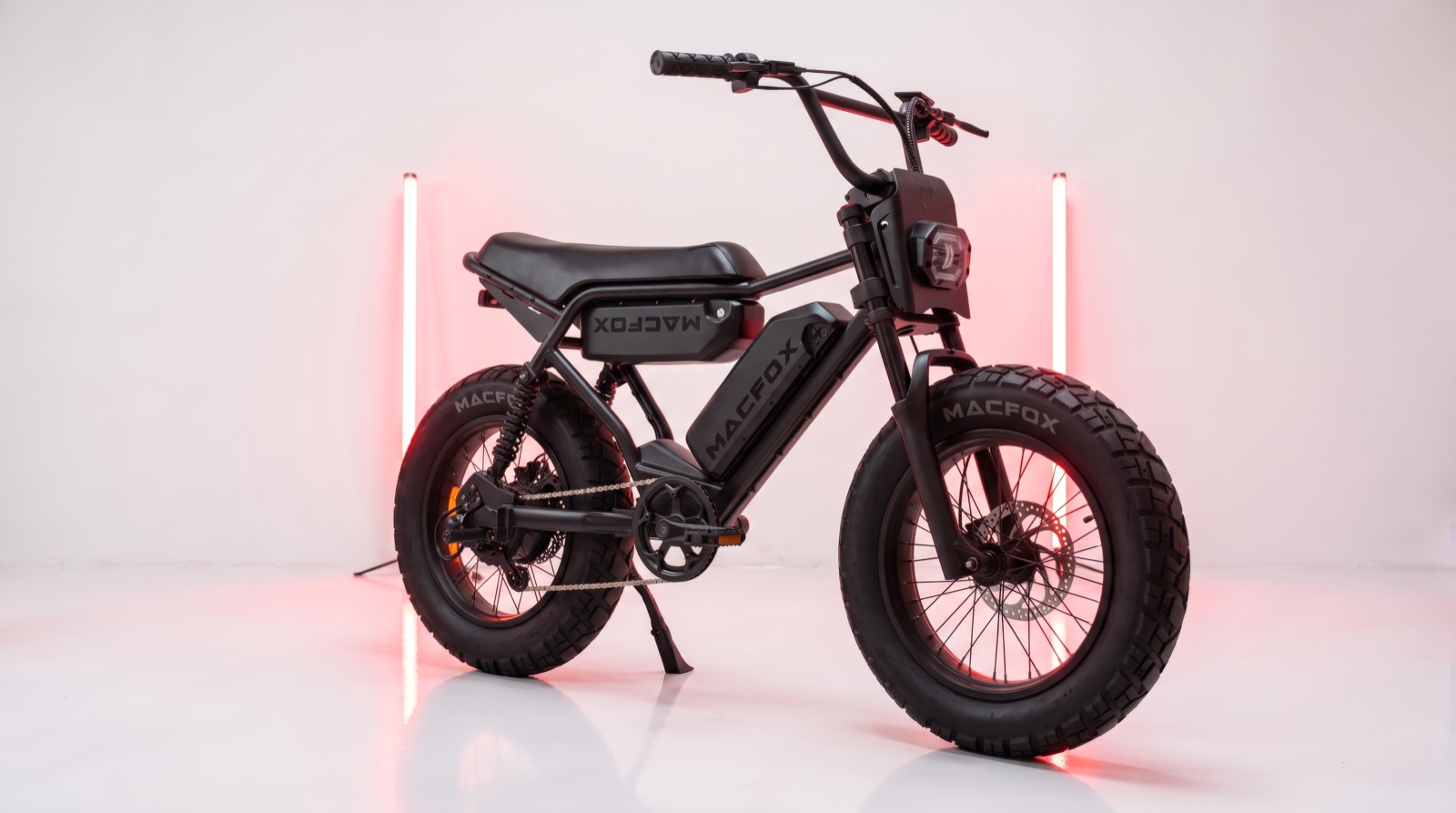
Macfox X2
A full-suspension fat-tire cruiser with a 750W (1000W peak) motor, 65Nm and up to 80 miles from dual batteries — the X2 Pro adds a carbon-steel frame and 5-inch rear tire.
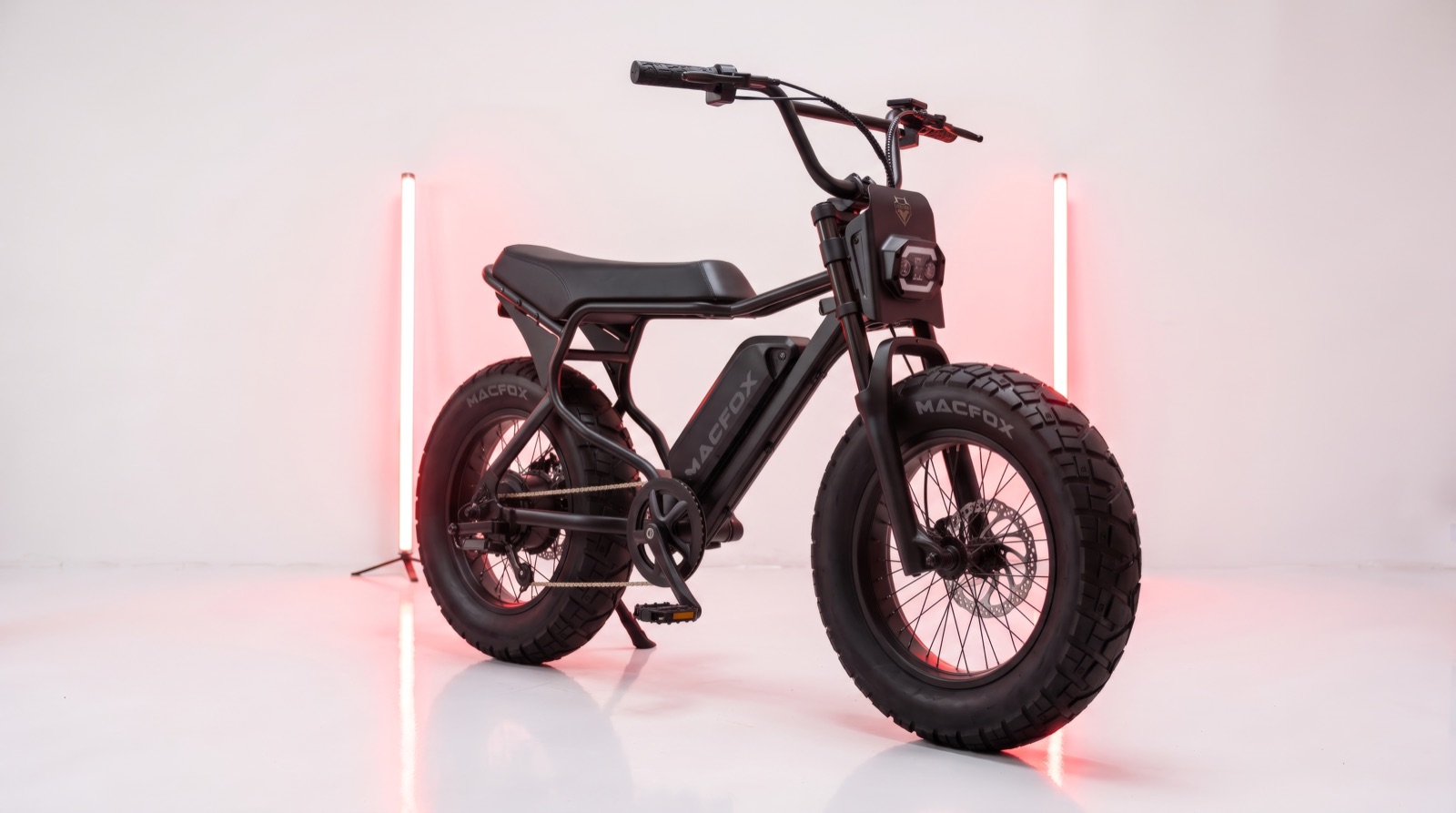
Macfox X7
The most moped-like of the range — a moto-styled fat bike with a big 20×5.0-inch rear tire, an adjustable spring fork, a 330 lb payload and up to 70 miles of dual-battery range.
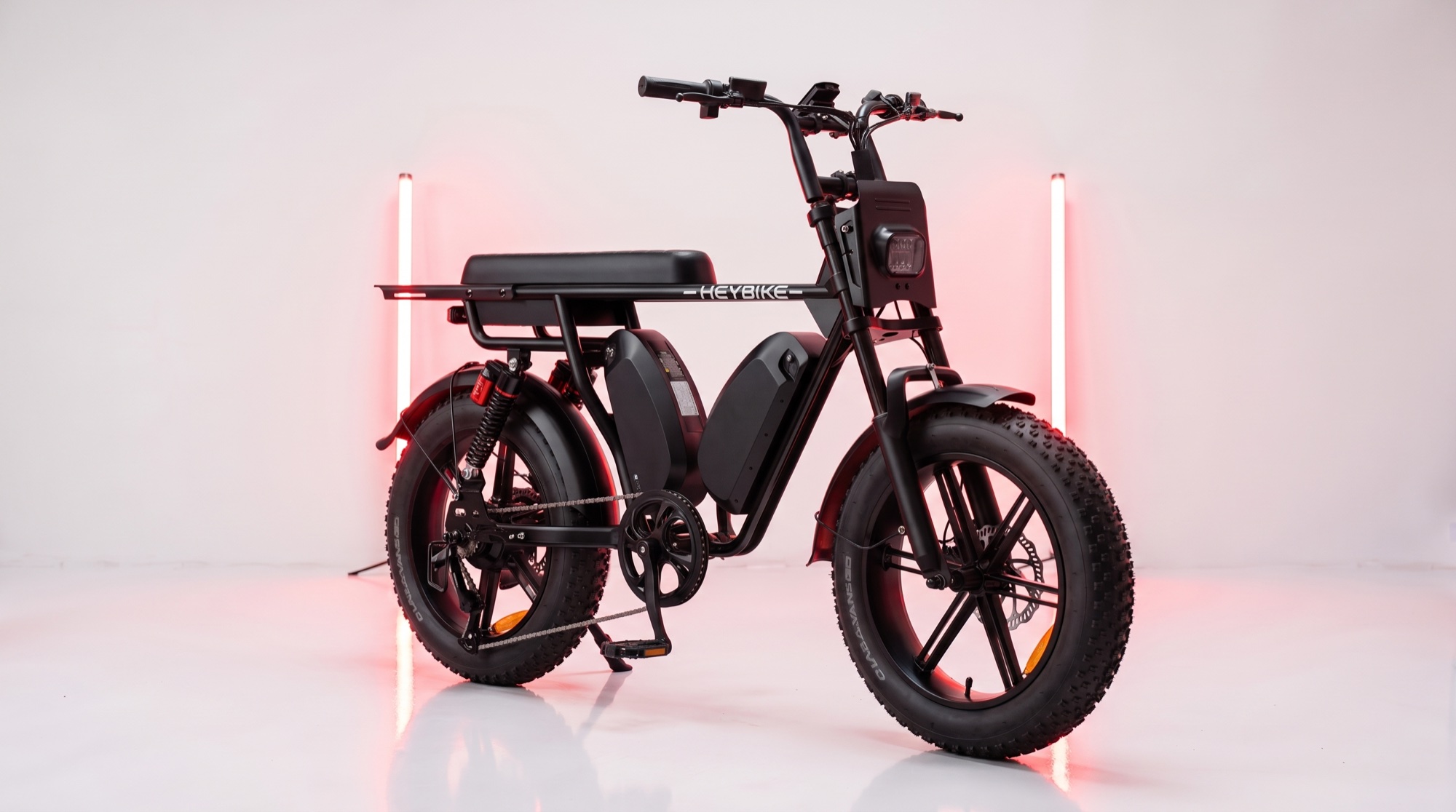
Heybike
Moto-inspired e-bikes with mirrors, turn signals and twist-throttle power — Heybike's street-legal take on the mini-moto.
Ride1Up
The Revv1 family — 52V Bafang moped-style e-bikes with 100Nm, big batteries and café-racer looks, from hardtail to full-suspension flagship.
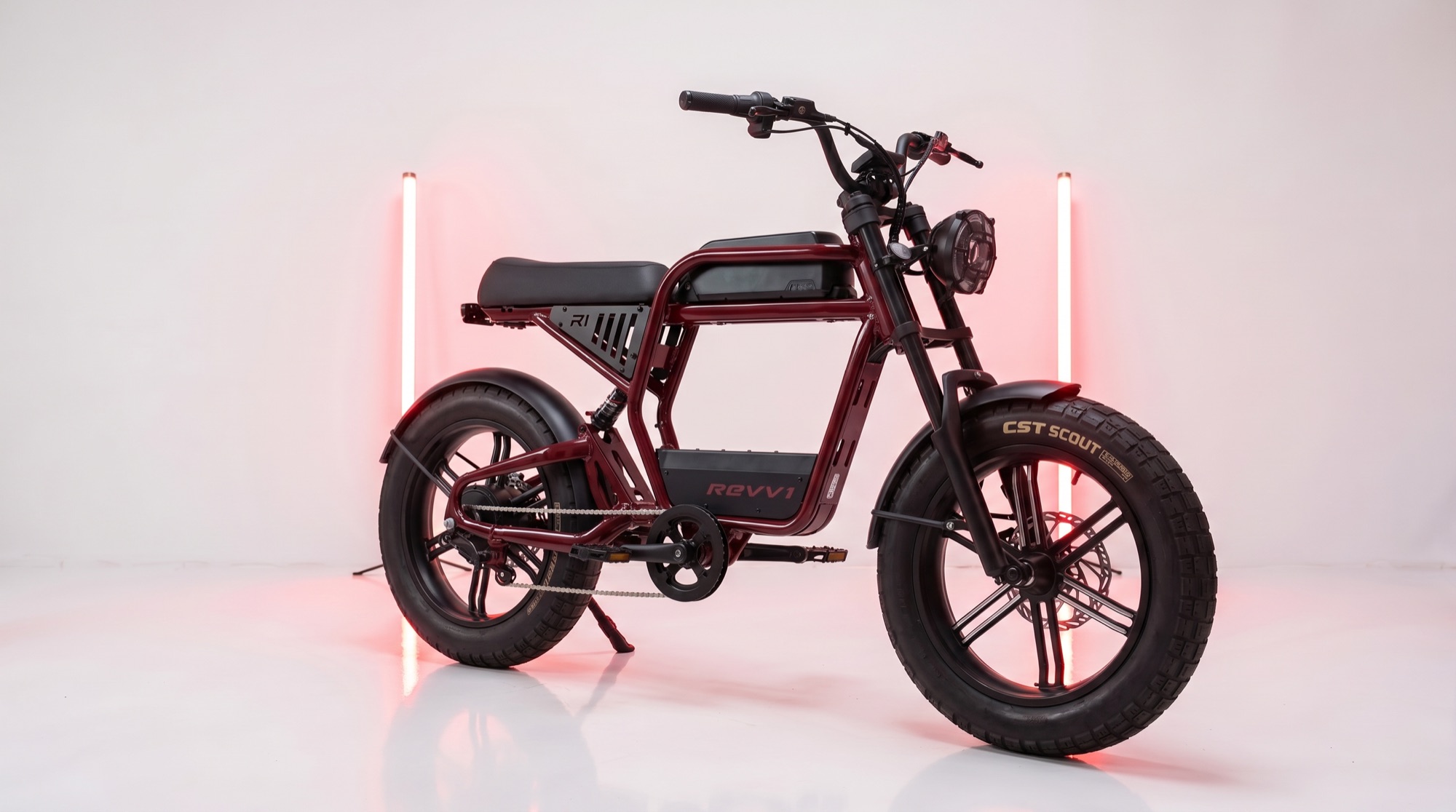
Revv1 FS
The full-suspension café-racer moped — a 52V Bafang hub with 100Nm, a huge 1,040Wh Samsung pack, a double-crown fork and 20×4in moto tyres.
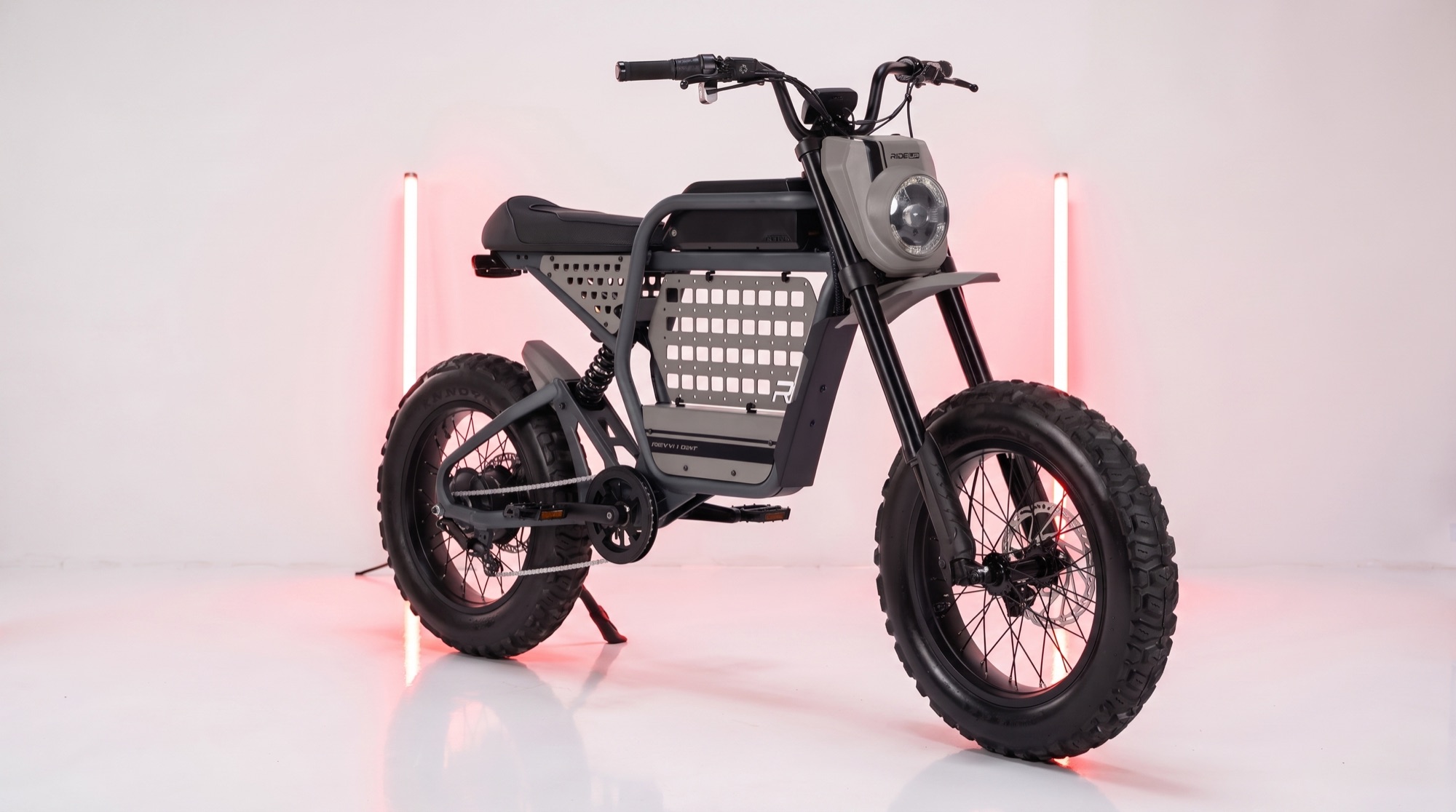
Revv1 DRT
The dirt-focused Revv — the 52V Bafang moto platform with a longer 150mm double-crown fork and aggressive knobby 20×4in tyres for the trails.
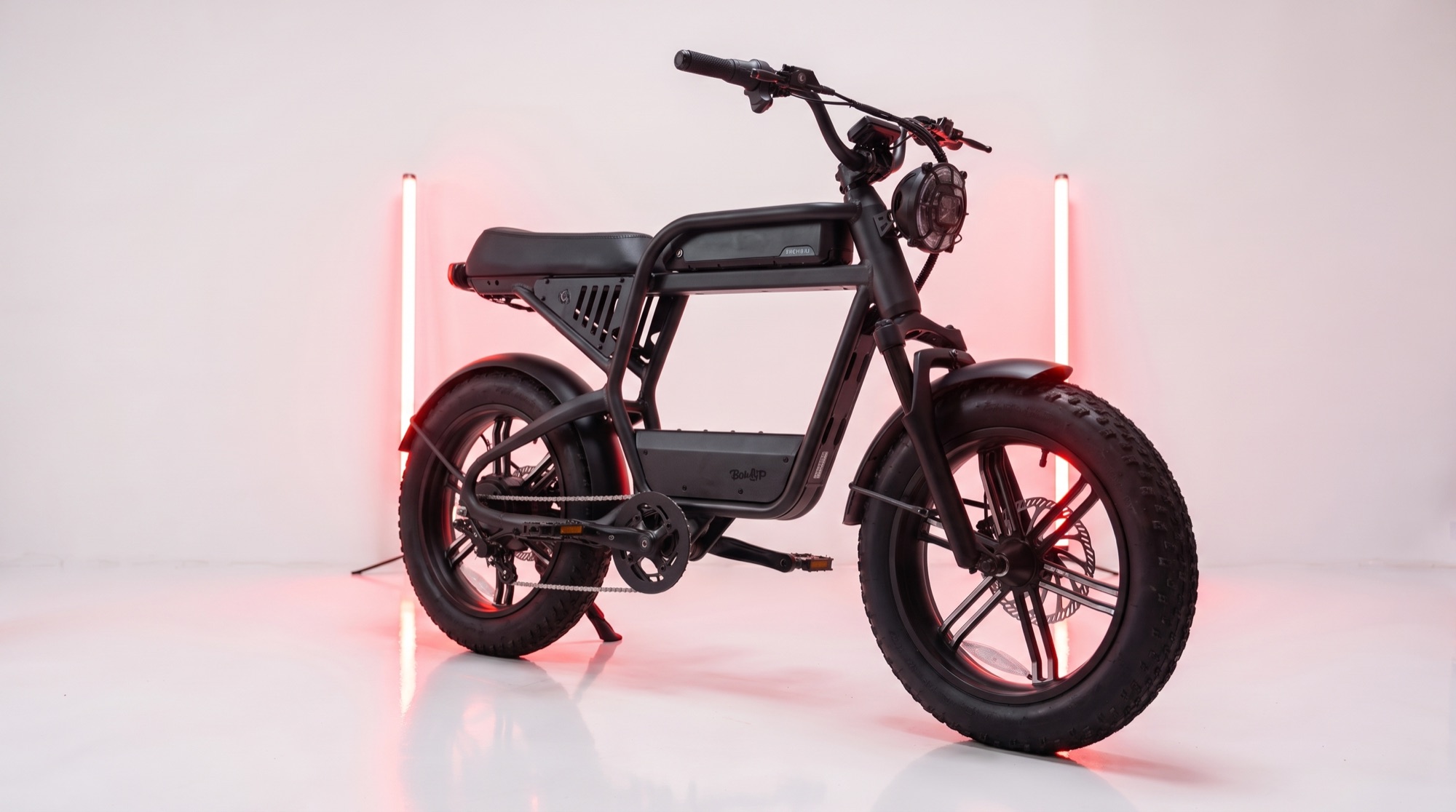
Revv1 HT
The lightest, cheapest Revv — the same 52V Bafang 100Nm and 4-piston brakes, minus the rear shock, from $1,895.
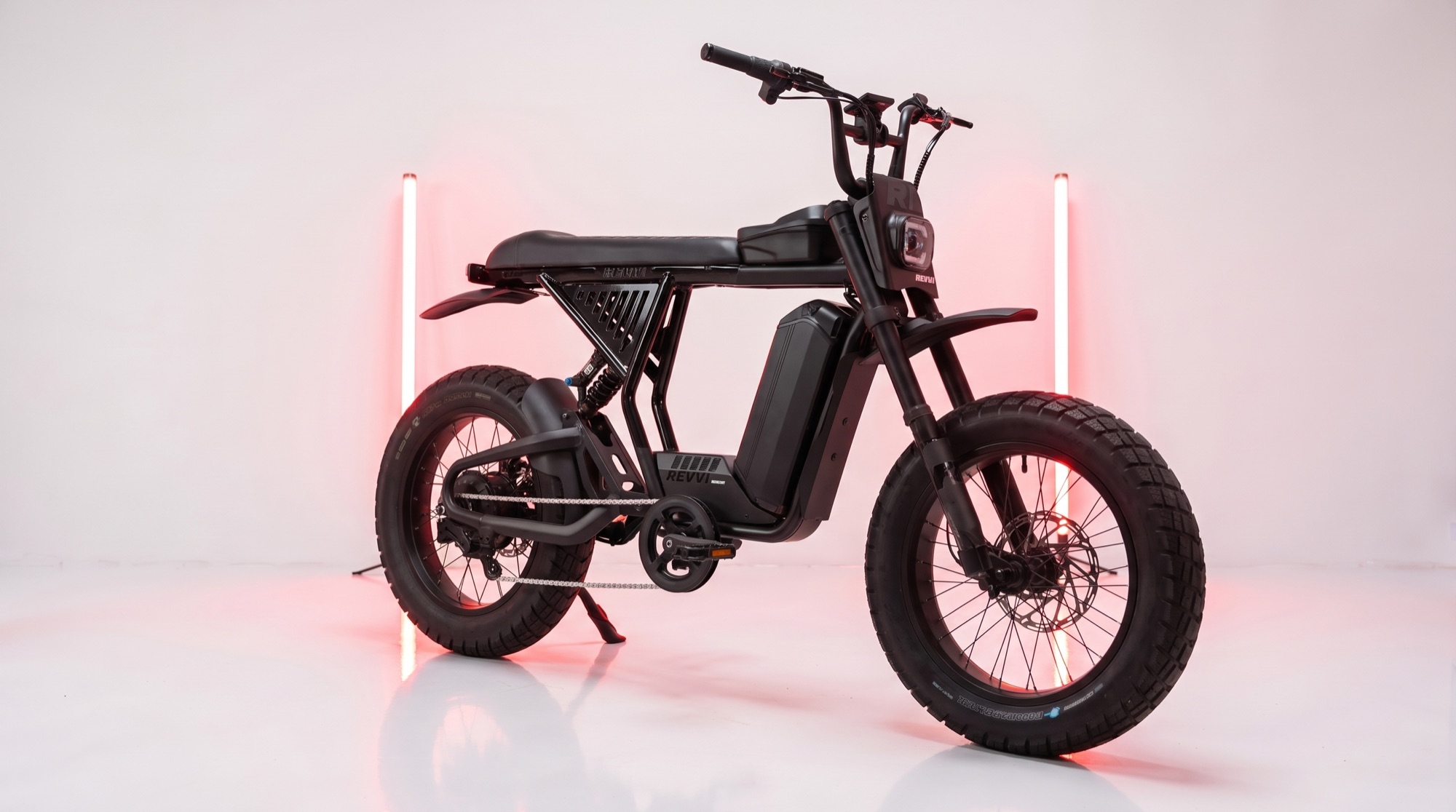
Revv1 EVO
The range-topping Revv — a next-gen semi-solid-state 1,040Wh battery with ~2-hour charging, a 160mm fork and a 400 lb payload.
Juiced Bikes
The relaunched Juiced lineup — the Scrambler, a 1,764W-peak fat-tyre moto e-bike with KKE suspension, Talon 4-piston brakes and a 52V ~1,000Wh pack, in full-suspension and hardtail builds.
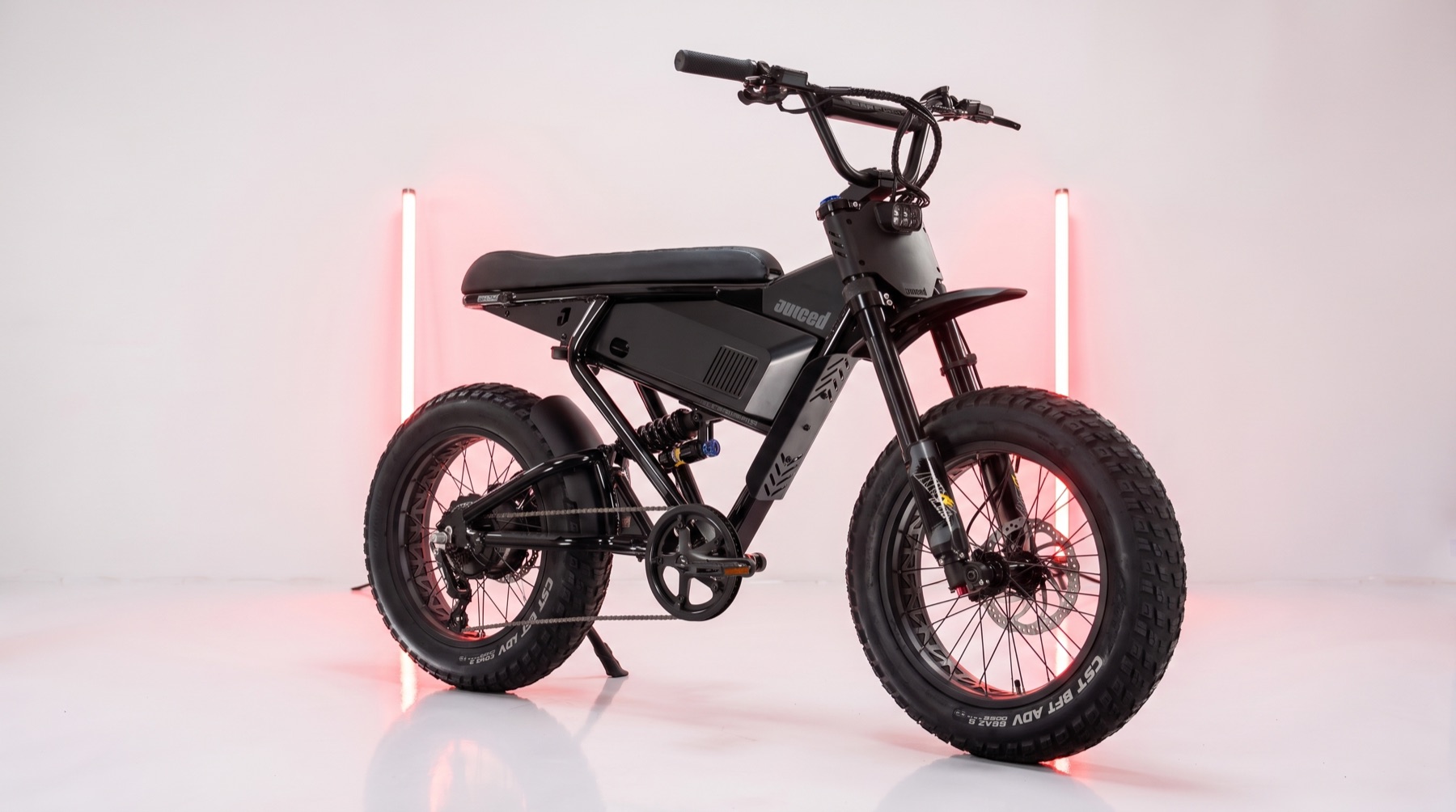
Scrambler FS
The full-suspension Scrambler — a 1,764W-peak fat-tyre moto e-bike with KKE suspension front and rear, Talon 4-piston hydraulic brakes and a big 52V ~1,000Wh pack.
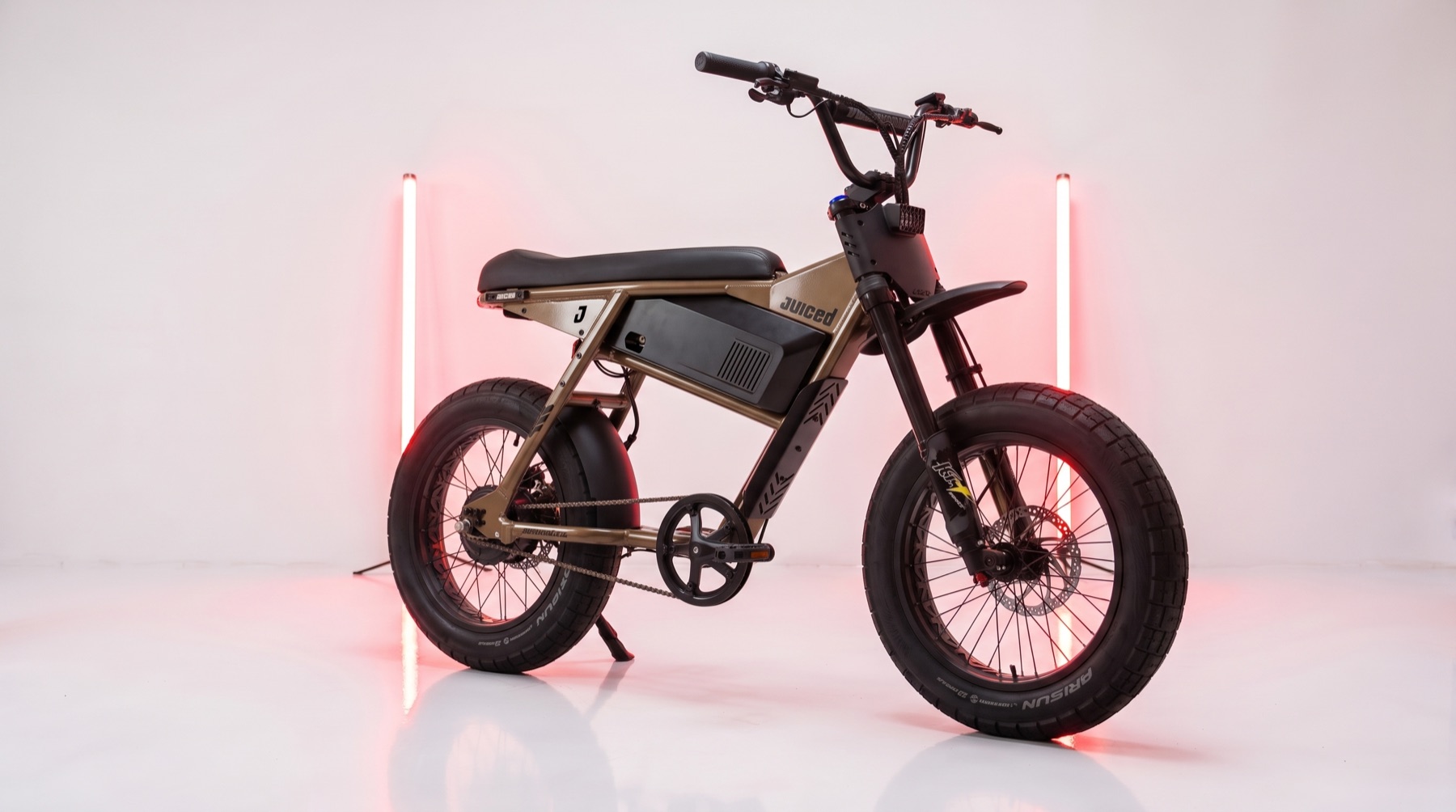
Scrambler HT
The hardtail Scrambler — the same 1,764W-peak motor and 52V ~1,000Wh pack with a 140mm KKE fork, in a lighter 83 lb rigid-rear build that saves you $200.
Aotos
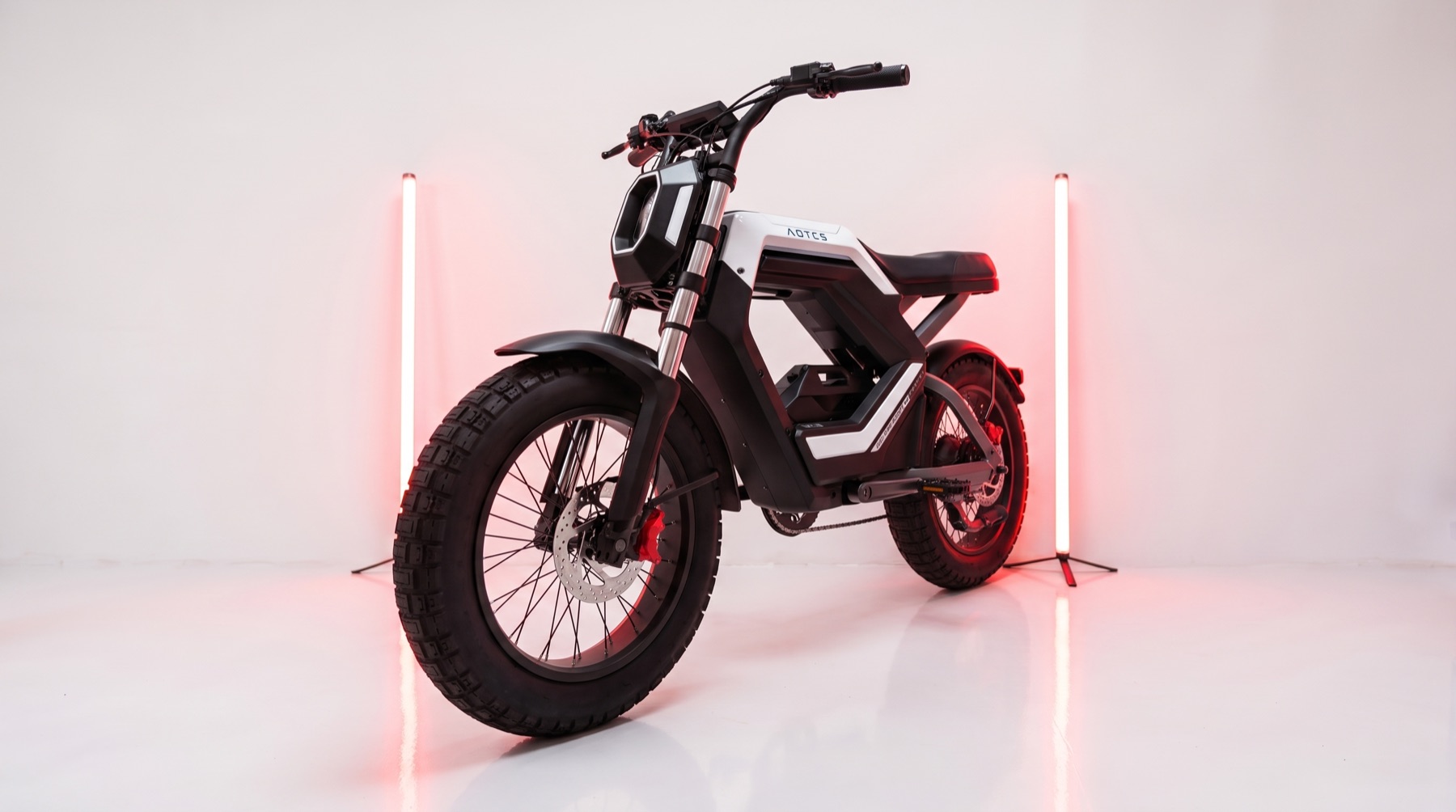
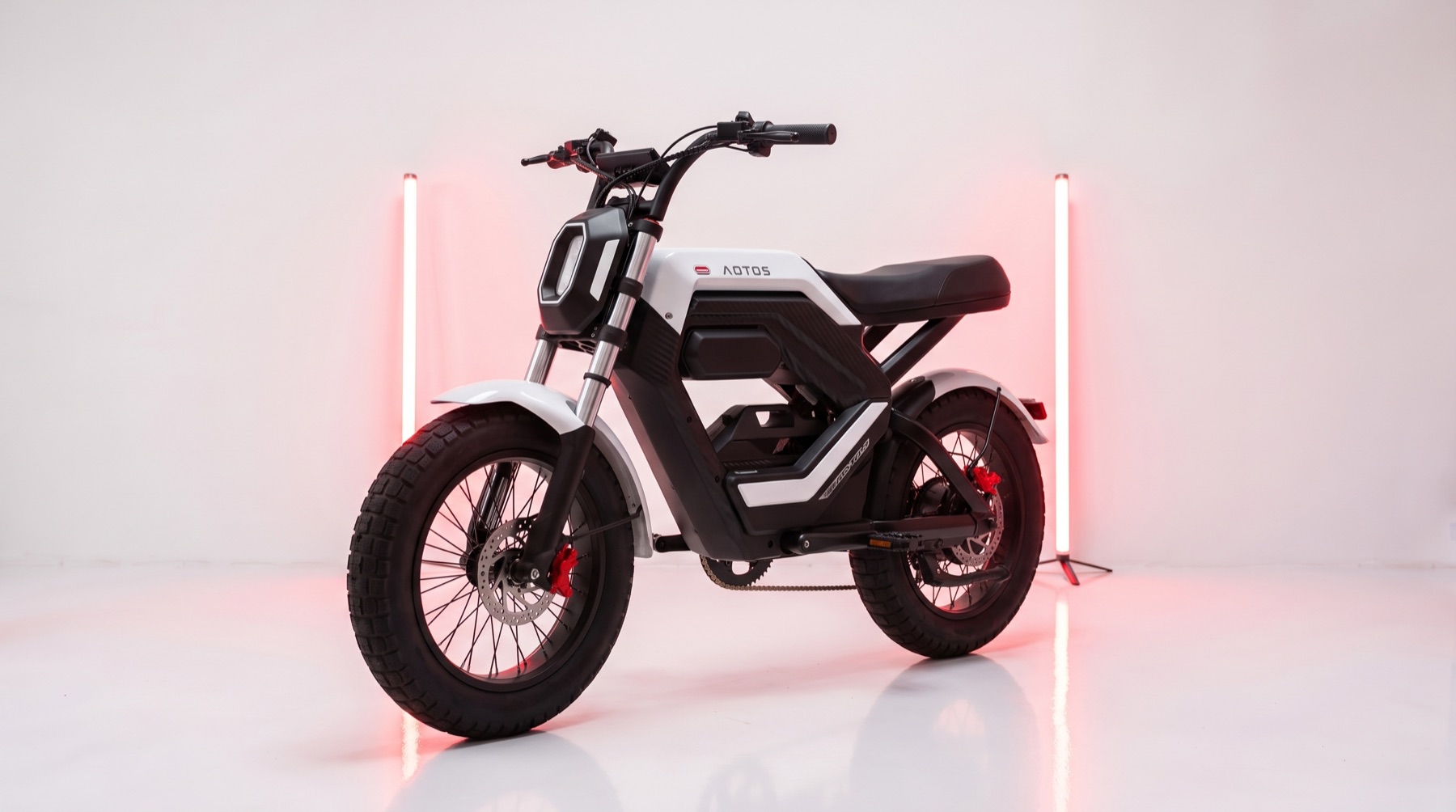
The reddot-winning Aotos Flux X26 — a fat-tyre moto e-bike with dual hydraulic suspension, a 5.5-inch smart TFT with synced navigation and app-connected security, in two power tunes.
Flux X26
The everyday Flux — a 750W hub with a 1,200W peak and 80 Nm, dual hydraulic suspension, hydraulic discs and a 48V 18Ah pack good for up to 50 miles.
Flux X26 Pro
The flagship Flux — 2,000W peak and 100 Nm with Boost mode, a 1,008Wh pack for up to 70 miles, plus tyre-pressure monitoring and built-in 4G GPS anti-theft.
Frequently asked questions
What makes an e-bike "moped-style"?
Moto looks on a bicycle frame: a long banana saddle, fat tires, foot pegs, wide bars, usually full suspension, and pedals that are still there. You sit up and back like you're on a small motorcycle instead of hunched over a bike. The pedals matter — they're what keeps most of these bikes legally classified as bicycles.
Are moped-style e-bikes street legal?
It depends entirely on how much power and speed the bike makes. In the US, a bike is treated as a bicycle when it stays inside the three-class system: Class 1 is pedal assist to 20 mph, Class 2 adds a throttle to 20 mph, and Class 3 is pedal assist to 28 mph. Street-legal models — the SL builds on this page — are capped to those limits from the factory. The high-power versions are sold for private property and off-road use, and they say so on their own pages. Your state and city rules are the ones that count, so check them before you ride on the road.
Do you actually have to pedal one?
Almost every moped-style bike here has a throttle, so no, you don't have to pedal to move. But pedalling is not decoration either: it stretches your range, it gets you home if the battery dies, and on a hill it takes load off the motor. On the heaviest 100 lb-plus builds, treat pedalling as a limp-home mode rather than real propulsion.
How much range should you expect?
Less than the box says. Manufacturers quote range at the lowest assist level with a light rider on flat ground in warm weather. Ride a heavy moped-style bike on the throttle at full speed and you can cut a claimed number roughly in half. Look at watt-hours instead of miles: a bigger pack is the only thing that reliably buys you distance.
What should you look for before you buy one?
Four things. UL certification on both the bike and the battery. Hydraulic brakes with big rotors, because these bikes are heavy and fast. Suspension that's actually adjustable to your weight, not just a spring that happens to be there. And a brand that will still be answering the phone in two years when you need a controller.
Do you need a licence, insurance or a helmet?
If the bike stays inside the class limits, most states treat it like a bicycle — no licence, no registration, and helmet rules that vary by age and class. Push past those limits and the same machine can legally become a moped or a motorcycle, which changes everything. Wear a helmet regardless; a 60 lb bike at 28 mph is not a beach cruiser.